
CA23149 – Short Term Scientific Mission grants: Announcement/Call for Applications (Deadline April 1, 2026)
February 17, 2026
Book: “Viktor Orbán’s Affairs with Women – The Illiberal Playbook: Gender, Power and Control”
March 20, 2026Report: 'Increasing Resilience for Young Researchers of Anti-Gender Politics and Mobilizations in CCE and NME Countries', Training School at CEU, Vienna, February 9-10, 2026
As part of the OPEN-COST Action: ‘Rising nationalisms, shifting geopolitics and the future of European higher education/research openness’ (CA22121) in collaboration with the ‘Antigender-Politics Action’ (CA2314), a two-day Training School was organised by Andrea Peto, Benoît Josset. Anita Lunic at the Central European University in Vienna on the 9th and 10th of February 2026.
This training school aimed to bring together PhD students, postdoctoral researchers, and early-career researchers to discuss ways of building resilience within the academic community, particularly in the context of studying anti-gender policies and mobilisations in Central and Eastern European (CEE) and North-Eastern European (NME) countries. Whilst the programme was primarily aimed at early-career researchers and academics, it was also open to university staff and faculty, academic administrators and leadership, and advocates for academic freedom.
This training school, entitled had several objectives. Its main aim was to bring together researchers and PhD students from twenty different countries and various disciplines, all with an interest in gender studies and academic resilience in Europe, against a backdrop marked by the rise of the far right and nationalism. Beyond this networking initiative, the objective was to propose ideas and presentations to strengthen academic resilience and safeguard against the political changes currently taking place in Europe. It also hoped to foster dialogue among participants to exchange solutions and create a safe, collaborative space for researchers, activists, and PhD students who may have been subjected to harassment or repression due to research on anti-gender politics or the far right in Europe.
This Training School enabled participants, particularly early-career researchers and PhD students, to develop a better understanding of the precautions required when studying sensitive topics, such as the far right in Europe, and when conducting fieldwork in contexts that may pose risks to their personal safety.
The diversity of speakers and perspectives made the programme highly valuable for all participants, regardless of their country of origin or specific research focus. Amon others, through the legal (Ottilia Torda and Raphaela Schwarzlmüller), digital (Benoit Josset), psychological (Fanni Toth), research challenges (Bernhard Weidinger, Estelle Delaine) and practical (Karolina Farska) tools presented, participants gained practical insights into the different strategies available to protect themselves within the academic environment, particularly in a context marked by the resurgence of anti-gender politics, nationalism and illiberalism in Europe.
The Training School also provided important opportunities for networking and exchange among researchers from different countries working on similar topics. Beyond academic discussions, the event created a safe and supportive space for participants who may have experienced challenges related to their research topics or academic positions, particularly in politically sensitive or contested fields such as gender studies.
Beyond its academic contribution, the Training School also played a key role in building connections between researchers facing similar challenges across different national contexts. In doing so, it reinforced the importance of collective reflection and mutual support in addressing the growing pressures on academic freedom inside the European Union.
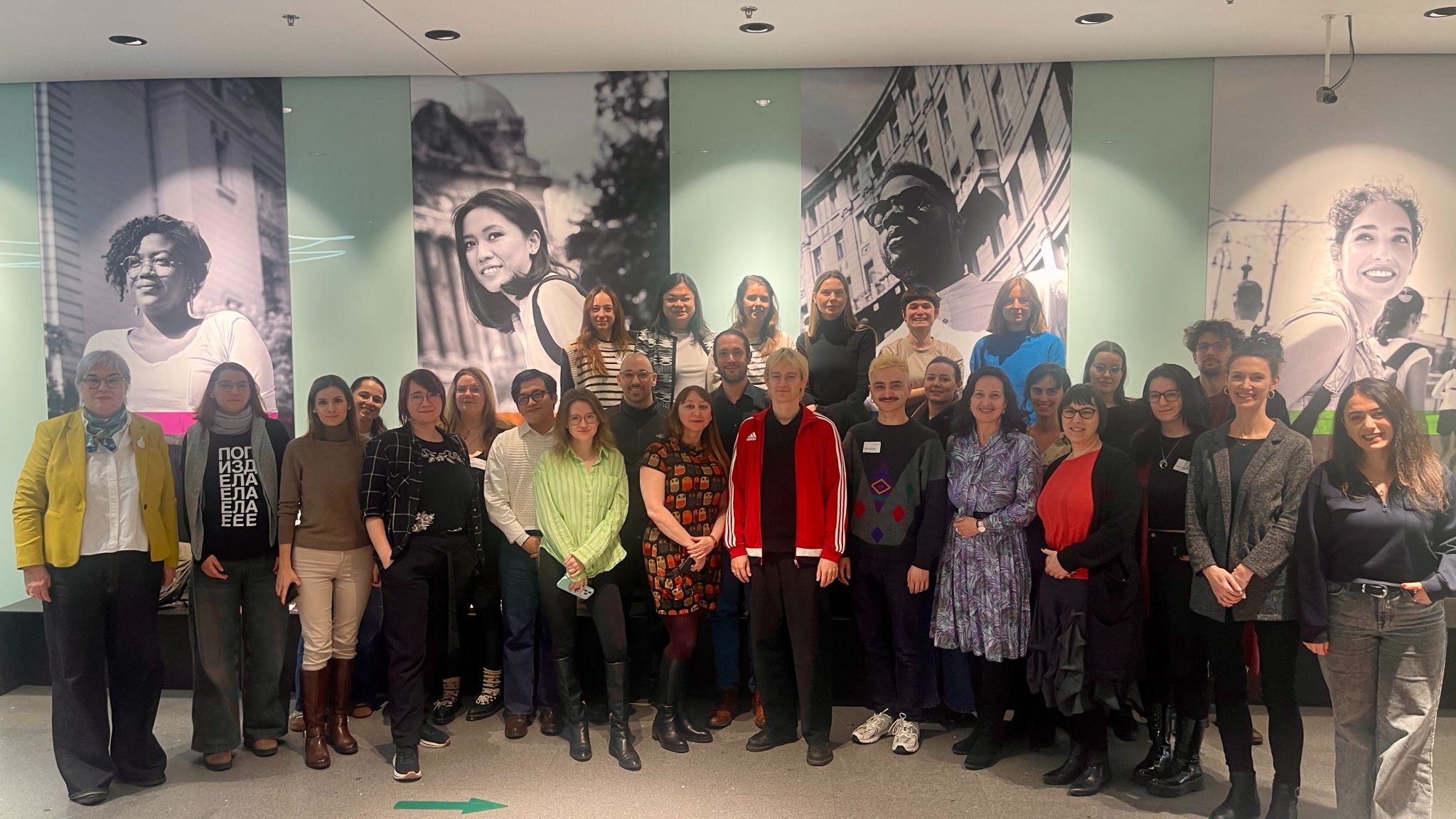
The Participants of the Training School in Vienna